
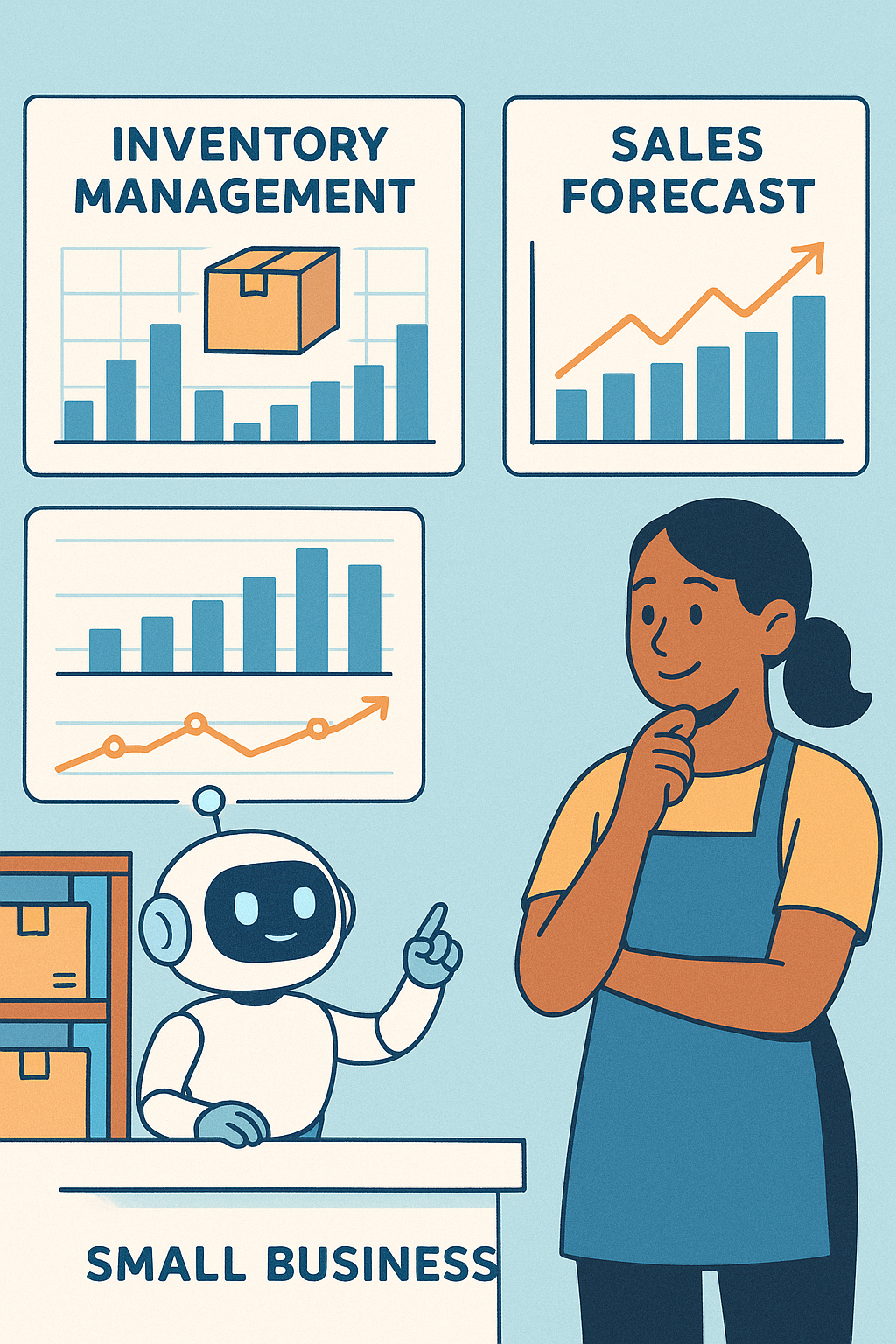
How AI Helps Small Businesses with Sales Forecasting, Smarter Inventory, and Strategic Discounts
For small business owners, managing inventory and predicting sales has always been a balancing act. Too much stock ties up cash and clutters shelves, while stockouts mean missed sales and unhappy customers. On top of that, knowing when to offer discounts—and on which products—can feel like a guessing game.
That’s where Artificial Intelligence (AI) steps in as a game-changer.
AI isn’t just for tech giants anymore. Small businesses are increasingly using AI-driven tools to forecast sales, optimize inventory levels, and strategically discount products to clear stock without hurting profit margins.
Let’s break down how AI can help small businesses in these critical areas:
1. Sales Forecasting: Predicting What (and When) Customers Will Buy
AI-powered sales forecasting uses data from:
- Past sales records
- Seasonal patterns
- Market trends
- Promotions & campaigns
- External factors like weather, economic shifts, or even local events
Unlike traditional methods, AI can process thousands of data points and find hidden patterns humans might miss. The result? Small businesses get highly accurate sales forecasts that help them plan better:
- Know which products will be in demand next month
- Anticipate slow periods and peak seasons
- Align purchasing and marketing strategies accordingly
Accurate forecasting means fewer surprises and more control over cash flow and business planning.
2. Smart Inventory Management: Keeping Stock Levels Just Right
AI-driven inventory systems continuously analyze sales trends, customer behavior, and supply chain data to maintain optimal inventory levels. This means:
- Avoiding overstock situations that tie up capital and lead to excess storage costs
- Preventing stockouts that frustrate customers and cause lost sales
- Automated reorder alerts when inventory dips below a set threshold
Some advanced AI tools even simulate “what-if” scenarios—like sudden demand surges or supplier delays—allowing businesses to stay agile and proactive.
For small businesses with limited storage space or tight cash flow, this level of precision is invaluable.
3. Strategic Discounting: Clearing Inventory Without Killing Margins
When certain products aren’t moving, offering discounts is often the go-to tactic. But blanket discounts can hurt profitability. AI takes a smarter approach:
- Identifying which products are at risk of becoming deadstock
- Determining the ideal discount level to stimulate demand without slashing profits
- Recommending timing for discounts based on customer buying patterns and competitor pricing
AI can even personalize discounts for specific customer segments, ensuring the right offer reaches the right audience. For example, loyal customers might get early-access discounts, while price-sensitive shoppers receive targeted promotions designed to convert them.
By making data-driven discounting decisions, small businesses can maximize revenue while effectively clearing inventory.
The Payoff: Efficiency, Profitability, and Smarter Decision-Making
AI doesn’t replace the intuition of a business owner—it enhances it with actionable insights. Small businesses that leverage AI for forecasting, inventory management, and discount strategies benefit from:
- Improved cash flow management
- Reduced waste and storage costs
- Higher profit margins on promotional sales
- Better customer satisfaction through reliable stock availability
Final Thought
In today’s fast-paced retail environment, small businesses need every competitive edge they can get. AI provides the kind of precision, speed, and strategic foresight that can turn small operations into smart, scalable businesses.
It’s not about working harder—it’s about working smarter with AI.